
Exploring faith through Torah, Gospel, and contemplative tradition.
The Many to the One
Many Lamps One Flame is a space for exploring the threads of wisdom that run through all spiritual and philosophical traditions. Sometimes that means diving into the Torah or Kabbalah, sometimes wandering through Hindu texts, Stoic philosophy, mystical poetry, or even modern psychology—wherever the search for meaning leads.
Posts arrive as inspiration strikes—reflections that challenge assumptions, connect ideas across cultures, and uncover the shared flame at the heart of our diverse lamps.
Whether you come from faith, philosophy, or simple curiosity, this is a place to sit with the questions, follow the sparks, and find new light in unexpected places.
The Journey is Shared
Though we walk many roads, the destination is one. Here, we pause together – sharing what we’ve learned, lighting each other’s lamps, and walking toward the same bright flame.
Latest Reflections
- The Preacher’s Poison
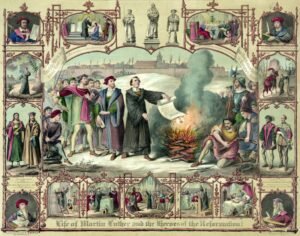 In 1523 he wrote that Jews were being treated as though they were dogs rather than human beings, and that a good Christian in their position might reasonably have refused the faith. In 1543 the same man wrote that their synagogues should be burned. The temptation is to call it a change of mind. Neither document supports that.
 - Nothing to Collect
 The rains did not come. Rabbi Eliezer descended to the ark and recited all twenty-four blessings—the complete fast-day liturgy, every word the tradition prescribes for exactly this emergency. Nothing happened. Rabbi Akiva descended after him and said two sentences. The rain fell.
 - Parashat Vayeilech
 Twice in one chapter Moses is told to make a witness. One is a scroll, handed to the priests and given a place beside the Ark. The other is a song, taught to the people and set into their mouths. Both are placed. Only one is promised it will still be there later.
 - Parashat Nitzavim
 He has served no foreign god. He is standing in the assembly, hearing the covenant read aloud, and somewhere in the middle of it he blesses himself. Torah answers with a refusal of forgiveness it never issued at Sinai—and then never uses the word forgive again.
 - The Words They Kept
 Ordinary prejudice aims at the outside of a thing and needs no entry into it. It also has a half-life—the strange food becomes a diner staple nobody thinks to trace. There is another inheritance that does not decay that way. It goes in. It takes a word, strips the grammar that gave it meaning, and hands it back as evidence.
 - From the Receiving End
 Merton wrote that G-d’s love is like a river springing up in the depth of the Divine Substance. Read quickly it sounds devotional—one more variation on G-d loves you. Read closely, he has already said something else entirely. He did not describe a feeling. He described a river.